
Clermont Historical Directory Holdings
There is no verified online municipal database of Clermont city directories. The honest route is repository-first. The collections below supply printed resident context, address history, or evidence that can be paired with a directory entry. The unverified city-directory row is a research task, not permission to invent a publisher or coverage year.
| Collection | Years or scope | Where held | Access |
|---|---|---|---|
| City and reverse directories | Exact Clermont run not published online | Cooper Memorial or regional repositories | Reference inquiry; confirm item and call number |
| Federal census | 1900 through 1950 public | NARA partner sites and library databases | Search index, then inspect enumeration image |
| Lake County deeds and plats | Plats 1884+, deeds 1887+, Official Records 1957+ | Lake County Clerk and Tavares room | Free index; books, microfilm, images, paid copies |
| Veterans History memoirs | Interviews begun in 1991; WWII and Korean War volumes | Cooper Memorial Genealogy Section | In-person or library inquiry |
| Lake County histories | 1929, 1988, school and pictorial works | State Library, museum, and library catalogs | Catalog or reading-room access |
| Historic Village materials | Community collections and objects | Clermont Historic Village | Weekend visits or society contact |
| Newspapers and obituaries | South Lake Press and Daily Commercial eras | Library databases, microfilm, local archives | Confirm title and date coverage |
Ask for the title page, publisher, edition year, call number, stated coverage, street guide, reverse section, and abbreviation key. A volume branded for a wider region may or may not have canvassed Clermont, especially an outlying postal area.
Start Clermont Research at Cooper
Cooper Memorial Library, at 2525 Oakley Seaver Drive, is the local first call for city directory research. Its catalog and databases can lead to telephone books, regional directories, high-school yearbooks, Lake County histories, newspaper access, obituary files, census sources, and genealogy databases. Availability should be checked with reference staff rather than assumed.
Use a focused question: ask whether a directory includes Clermont, whether it has both alphabetical and reverse sections, and what publisher and edition are on the title page. Request the call number, access limits, and copying policy. If the target is an address, give both the street form used now and any known older spelling. If the target is a name, include initials, suffixes, married or maiden forms, and an approximate period.
Note: A catalog title that says Lake County or Orlando does not by itself prove that the printed canvass included Clermont residents.
Read a Clermont Directory Entry
A twentieth-century city directory entry often compresses several facts into one line. Transcribe what is printed before expanding an abbreviation. Keep the page and column, because a name detached from its citation is hard to verify. The volume's own front matter controls the meaning of symbols and short forms.
| Printed name | Record surname, given name, initials, and order without modernizing spelling. |
|---|---|
| Spouse notation | A name in parentheses may identify a spouse, if that edition's key says so. |
| Work detail | An occupation or employer may help distinguish people with the same name. |
| Residence | Copy the house number, street, unit, and any residence marker exactly. |
| Status mark | Owner, renter, widow, boards, or rooms marks count only when the key defines them. |
| Cross-reference | Follow “see” references and note the page or related name. |
- Criss-cross directory
- A section arranged by street and house number, useful for finding listed adults at one historical address.
- Householder index
- An address-oriented list of the person treated as the household head by that publisher.
- Abbreviation key
- The volume's explanation of symbols and shortened words, usually in front matter.
- Canvass date
- The period when the publisher gathered data, which may differ from the cover year.
A common “h” may mean house or home and “wid” may mean widow, but those meanings remain provisional until the Clermont edition's key confirms them.
Clermont Records Beyond the Shelf
The State Archives of Florida offers a catalog and research route for manuscripts, maps, photographs, and state or county records. A catalog description does not mean the item is digitized. Contact archives staff for format, access, and reproduction details.
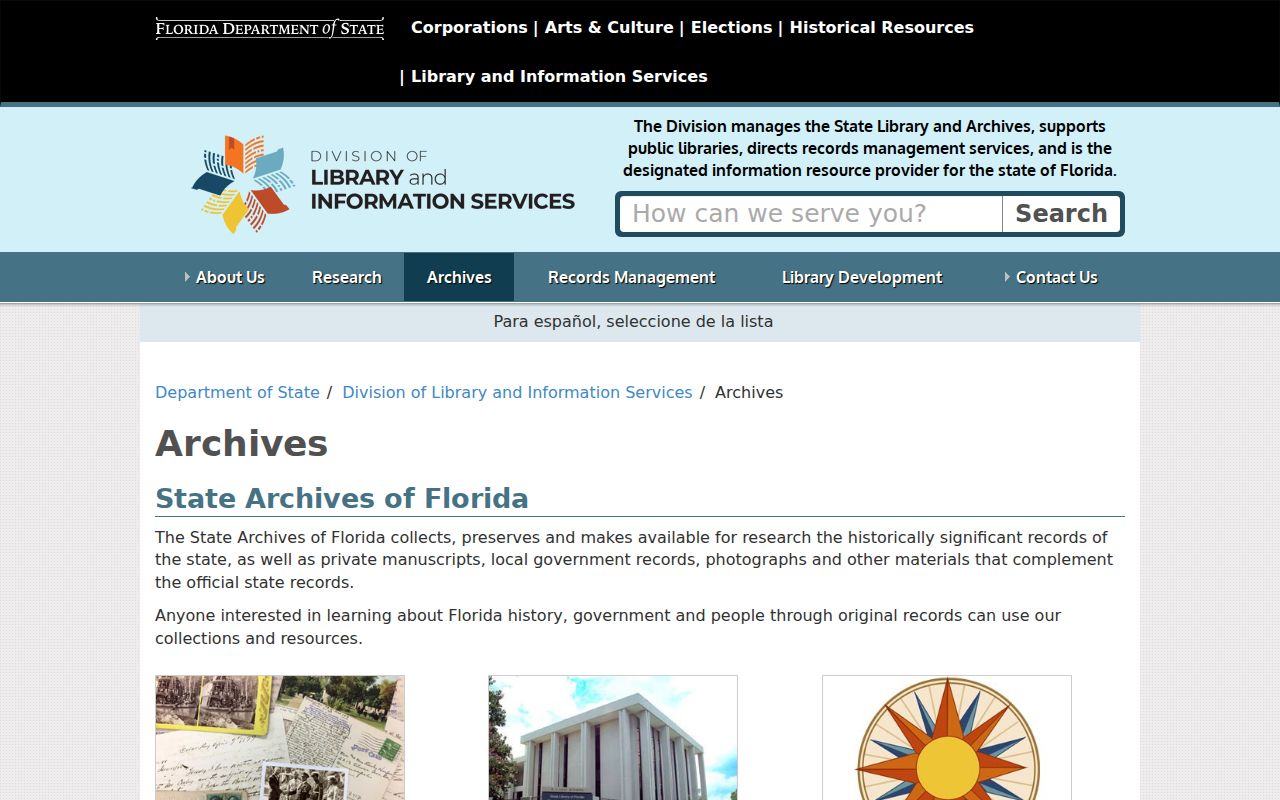
The archive route is most useful after the name, approximate year, record creator, and Clermont or Lake County context have been narrowed.
The Lake County Historical Museum at 317 W. Main Street in Tavares adds county context and operates in the historic courthouse. Its researched hours are Tuesday through Friday, 10 a.m. to 3 p.m., with a published phone of 352-343-9890. Clermont Historic Village, at 490 West Avenue, holds community materials and receives visitors on weekends from 1 to 4 p.m., with private tours available by contact.
Clermont's 1914 Library Story
Clermont's first Cooper library dates to 1914, when Alice Cooper donated lots for a community-supported one-room library. The original building now survives at Clermont Historic Village. That continuity makes the building more than a local landmark: it links early community reading, modern genealogy work, and the historical society's preservation efforts.
The volunteer tradition also produced the South Lake County Veterans History Project. Local interviews began in 1991 and grew into published memoir volumes about World War II and Korean War veterans. Those books are kept in Cooper Memorial's second-floor Genealogy Section, while some World War II volumes are also associated with the Historic Village. A named veteran may appear there with life details and community ties that a conventional city directory reduced to one line.
Pair Clermont Directories With Deeds
Printed city directories identify listed adults and street addresses, but they do not establish legal ownership. The Lake County Clerk's historical coverage supplies that second layer. Plats begin October 11, 1884, deeds begin August 5, 1887, and modern Official Records begin January 1, 1957. The public research area in Tavares provides books, microfilm, and images reaching 1887.
The Clerk's historical-records page describes those series and the limits on public web images.
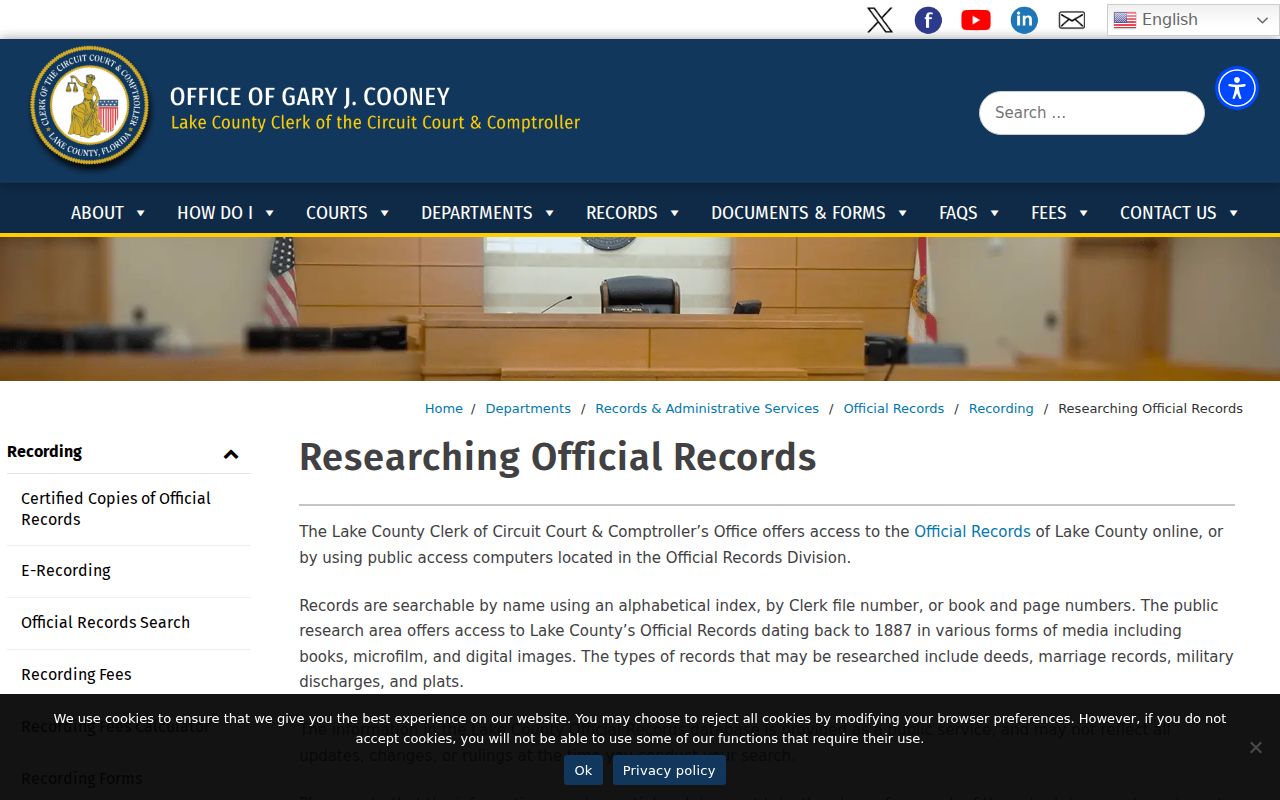
A recorded deed can confirm the titleholder and legal description for an address found in a directory. It still does not prove that every party named in the instrument lived there.
The online Clerk index is one channel. The Tavares counter and research room are the fallback for books or images not available on the web, while the Official Records order form accepts an instrument number or book and page for mailed or certified copies.
Keep Clermont Record Types Separate
Historical research often reaches court or probate records after a person disappears from a city directory. Lake County ShowCase provides public case search, but registered roles may have different image access. The portal guide helps distinguish a docket entry from an available document image.
The Lake County records portal guide shows those access levels and screen conventions.
Use a probate or court result to explain an event only after reading the docket and disposition. A name match alone is not enough.
If the desired case is not online, provide exact name variants, approximate years, division if known, and a discovered case number to the Clerk. Ask for the docket first when the needed filing is unclear. The published offline search form states a charge per calendar year and name, so a narrow span controls cost.
Clermont Directory Research Timeline
Clermont's printed directory years remain unverified, but the surrounding record timeline is firm enough to guide a search. It also shows why “not online” does not mean that no record exists.
| Date | Clermont research milestone |
|---|---|
| 1884 | Lake County's online plat run begins, preserving subdivision and street frameworks. |
| 1887 | Online deed coverage and the Clerk's historical research media begin around county formation. |
| 1900 | The first public federal census in the researched Clermont range provides household context. |
| 1914 | The original Cooper library opens after Alice Cooper's lot donation. |
| 1950 | The latest currently public federal decennial census can be paired with directory editions. |
| 1957 | The Clerk's modern Official Records series begins. |
| 1991 | Local volunteers begin interviews for the veterans memoir project. |
| 1998 | The Clermont Historical Society is founded. |
No verified courthouse fire destroyed a defined Clermont record series, and no official first or last printed-directory year was found. Generic claims about either should not be repeated.
Trace Clermont Families by Directory
A city directory becomes most useful when each edition is treated as one dated observation. Log every year found, not only the years when the address changes. Keep spelling and abbreviations intact, then compare the nearest census, deed, obituary, newspaper, or probate record.
- Find the person's latest verified entry and record the publisher, year, page, column, address, spouse notation, and work detail.
- Move backward edition by edition, checking name variants and the alphabetical section each time.
- Use the reverse section, when present, to inspect the same house number and nearby listed adults.
- Pair the entry with a public census from 1900 through 1950 to test age, birthplace, relationships, and household composition.
- Use deeds for ownership, then newspapers, obituaries, and probate to explain a disappearance or family transition.
A missing entry does not prove a move or death. The person may have been omitted, unlisted, outside the publisher's canvass, recorded under another name, or living in postal Clermont beyond the edition's boundary. The modern Clermont street directory method is better when the goal is a current address-keyed parcel chain.