
Walk a Clermont Street Record
A sound Clermont street directory search moves from the place to the records tied to it. Start with the situs address, which is the property's physical location. The Lake County Property Appraiser connects that location to a parcel number, alternate key, owner, mailing address, legal description, assessment data, improvements, exemptions, and sales. The parcel number is the most stable link when a street spelling or unit format changes.
- Run the situs address through the Lake County Property Appraiser and save the parcel number, alternate key, municipality, owner, and legal description.
- Open the parcel map and click nearby lots to understand the street, subdivision, rights-of-way, and actual adjacency.
- Compare the owner's mailing address with the situs address, treating a match as a clue rather than proof of occupancy.
- Follow the parcel card's instrument or book-and-page references into the Clerk's Official Records and read the deed.
- Add Clermont permit records for parcels inside city limits, then consult lawful voter extracts or verified reverse directories for occupant evidence.
This order avoids searching a person's name before the property is firmly identified. When the task expands from an address to a whole historical volume, the Clermont city directory collections provide the proper shelf-based method.
Clermont Property Search Fields
The Lake County Property Appraiser Property Search is the main modern address index. Data is updated nightly, but the parcel card warns that its sales history is not a complete chain of title. Search loosely first if a suffix or unit blocks a match, then use the parcel number for exact follow-up work.
| Search route | Input | Best use | Important limit |
|---|---|---|---|
| Owner Name | Surname or name variant | Find parcels linked to one titleholder | Names can be shared or indexed differently |
| Property Address | Situs street address | Start a by-address search | Try without suffix or unit if needed |
| Parcel / Alternate Key | Official identifier | Return to the exact parcel | Must first be copied correctly |
| Sales Search | Date, price, property filters | Compare transfers along a street | Not the full deed chain |
| Map Search | Geographic browse | Select adjacent parcels | Assessment map, not a survey |
The parcel card makes a crucial Clermont distinction: Property Location is the situs, while Mailing Address is where the owner receives mail. A mismatch can point to an absentee owner, trust, business, or simple mailing choice. It says nothing certain about who sleeps at the property.
The Lake County parcel-card view shows how those address and ownership fields sit together.
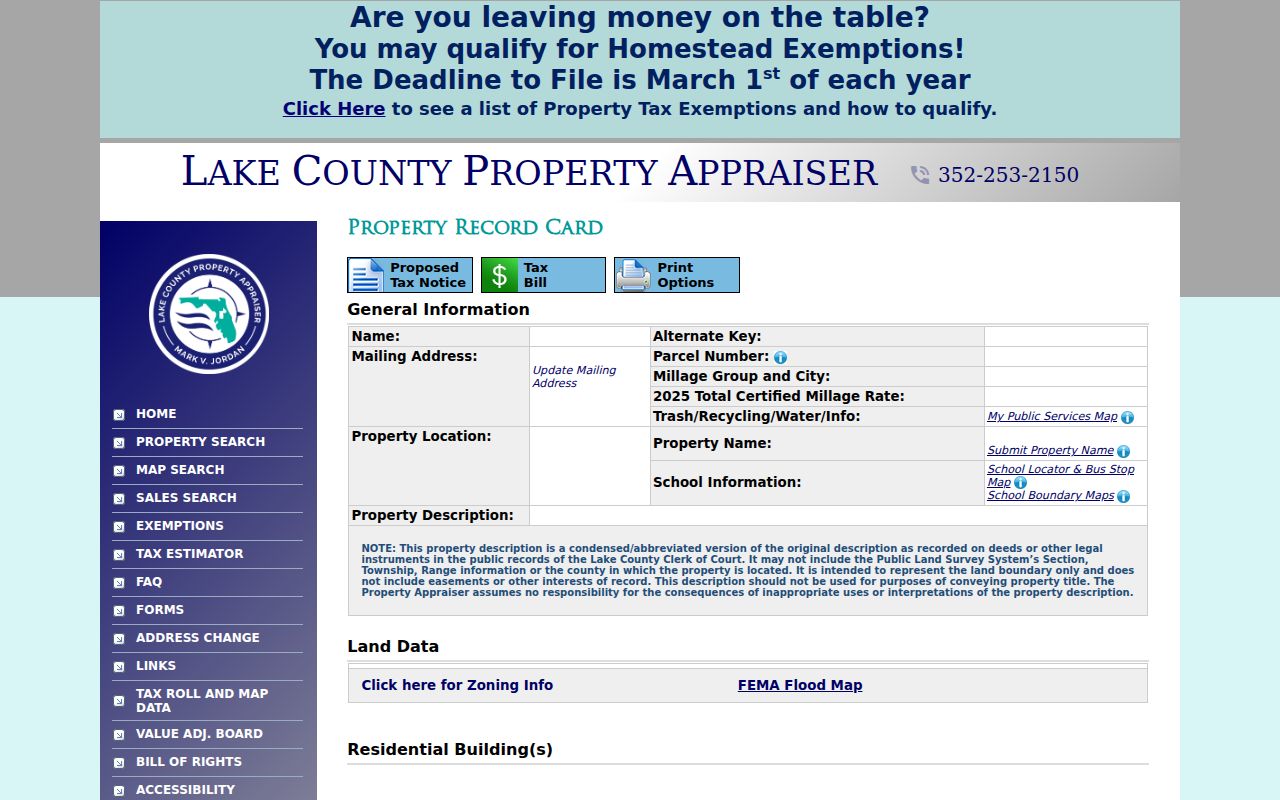
That layout keeps title, tax, improvement, and sales clues tied to one parcel without mistaking one field for current residence.
Map Clermont Parcels by Street
The Property Appraiser map and Lake County GIS GeoHub add spatial context that a name list lacks. Pan to the street, identify the target parcel, and click outward one lot at a time. Lot geometry, subdivision labels, zoning, flood links, and public layers can explain why two close addresses are not actually neighbors. Clermont's hills, lakes, rights-of-way, and irregular growth make that check useful.
- Parcel
- A unit of land identified for assessment and record linking.
- Situs address
- The physical location of the parcel, distinct from the owner's mailing address.
- Plat
- A recorded plan showing subdivision lots, blocks, streets, and related boundaries.
- Criss-cross directory
- A printed directory arranged by street and house number instead of only by resident name.
Lake County tax maps provide another route when section, township, and range are known. The tax-map search returns assessment map PDFs, but those lines are aids and not legal surveys.
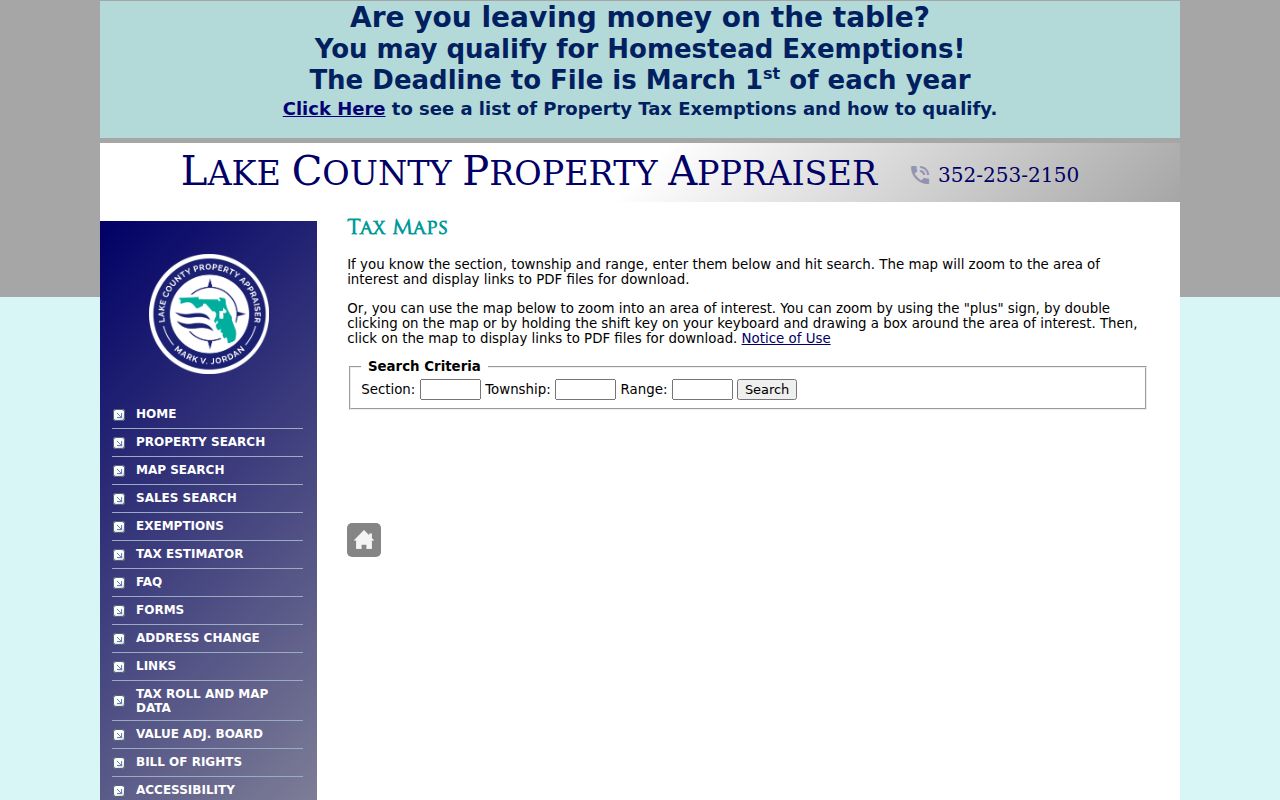
The map can orient a street search before a recorded plat, deed, or survey settles a legal-boundary question.
Note: A parcel across a lake or right-of-way may look close on screen without being part of the same Clermont block.
Clermont Records Indexed by Address
Different custodians describe different relationships to a Clermont address. Ownership comes from assessment and conveyance records. A permit shows work or an application. A voter record reflects information reported to elections, subject to Florida's protected-record rules. None is a complete household roster.
| Address record | Custodian | What it contributes | Access channel |
|---|---|---|---|
| Assessment roll | Lake County Property Appraiser | Owner, mailing and situs addresses, parcel, values, improvements | Free search, map, phone, or records request |
| Deeds and liens | Lake County Clerk | Parties, legal description, dates, consideration, return address | Online index/images, Tavares room, mailed copy order |
| Plats | Lake County Clerk | Subdivision, lot, block, and recorded street framework | Online from 1884, plus research room |
| Permits | Clermont or Lake County | Project, dates, status, and named parties where public | eTRAKiT or focused records request |
| Voter data | Lake elections and state Division | Public registration fields after exemptions | Individual service, extract, or request |
When an online result fails, call the Property Appraiser at 352-253-2150 or request a particular roll year's card by parcel key. For deeds, the Official Records Division at 550 W. Main Street in Tavares provides books, microfilm, and images dating to 1887. A narrow request works best.
Follow Clermont Deeds by Street
The Lake County Official Records search accepts a party name, instrument number, or book and page, with optional record-type and date controls. Modern Official Records begin January 1, 1957. A separate online deed run covers August 5, 1887 through December 31, 1956, while plats reach October 11, 1884.
Read the instrument, not just the index row. A deed may show the grantor, or seller, and grantee, or recipient, plus the legal description, execution and recording details, consideration, and return address. Repeat the search using an earlier seller as a prior grantee, while matching the lot, block, subdivision, or legal description. Names alone are too weak for a safe street-by-street chain.
For a copy, use the Clerk's order form with the instrument number or book and page. The researched 2024 revision lists $1 per page, $2 paper certification, $8 electronic certification, and $1 handling when no return envelope is supplied. Recheck before ordering because fees can change.
Add Clermont Permit Evidence
For land inside incorporated Clermont, the Clermont eTRAKiT property search adds municipal activity to the street directory. Its public controls include Search By, a match operator, Search Value, map browse, and a Search button. Result tabs can include parcel, owner, restrictions, land use, building, legal description, and inspections.
The live interface shows how an address or parcel becomes a permit and inspection query.
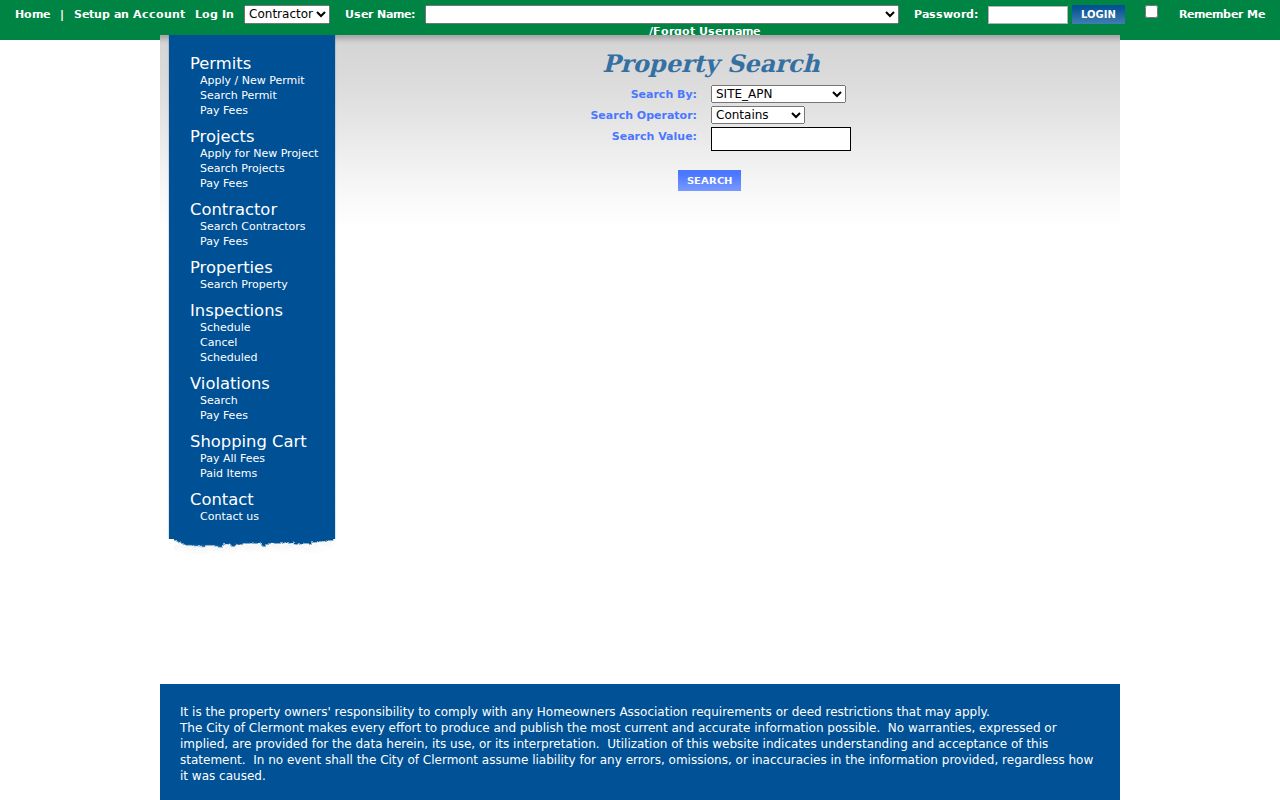
Save the case or permit number, type, status, application and final dates, site address, and publicly shown parties, then verify current ownership through Lake County.
Permits date work, not a move. If the portal lacks the needed file, request the application, issuance and final status, inspection history, and releasable correspondence for a defined date range. Some plans or security-sensitive details may be withheld.
Check Clermont Street Jurisdiction
A Clermont mailing name does not prove that a parcel lies within the city. Postal Clermont extends into unincorporated Lake County and toward neighboring areas. Confirm the city or millage field on the parcel card and compare the official municipal boundary before choosing a permit custodian.
The Clermont Zoning Division explains that property inside city limits needs city zoning approval before a building permit.
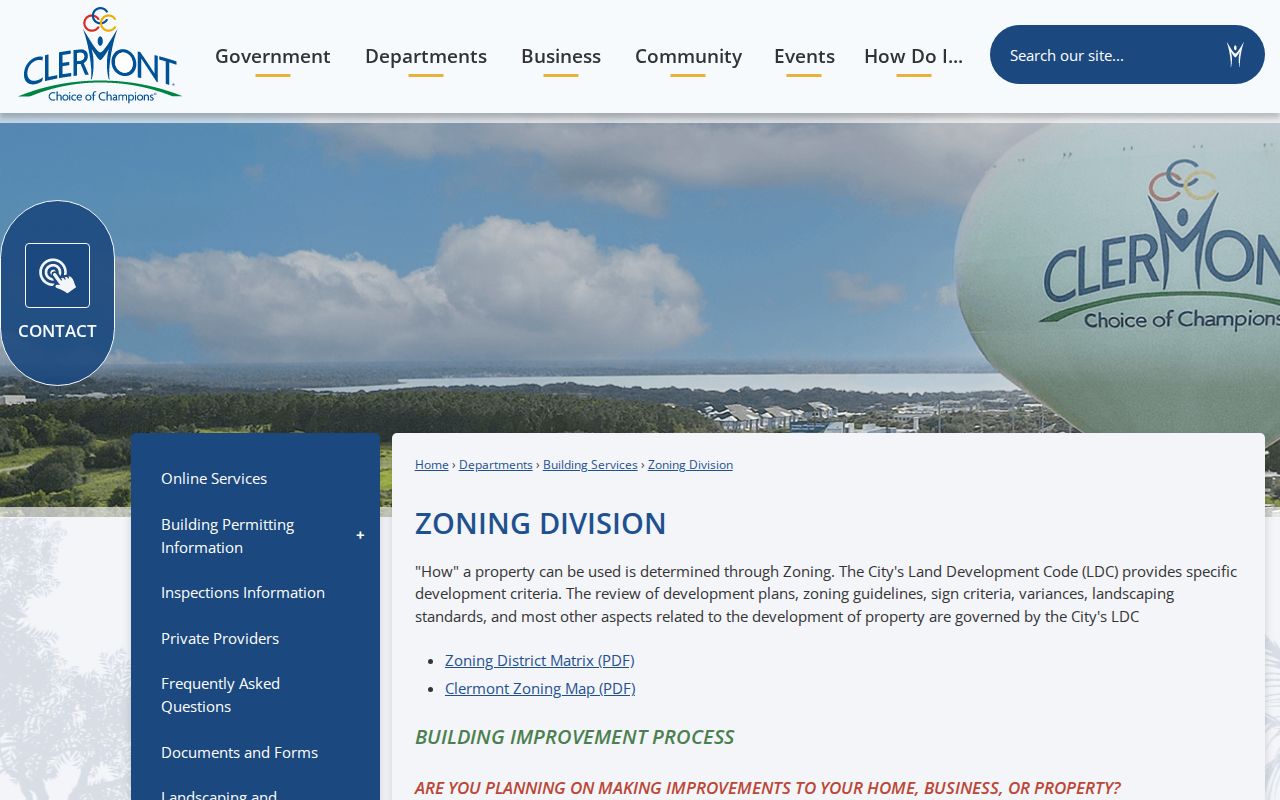
This check prevents a fruitless city search when Lake County or another municipality holds the address file.
Note: Label each address as situs, mailing, voter-reported, filing, or return address instead of merging unlike fields into one residence claim.
Use Clermont Street Voter Data
The Lake County Supervisor of Elections offers an individual precinct service, not a reverse street roster. Florida law makes specified voter fields public, including name, address, date of birth, party affiliation, phone, and email when supplied. Social Security numbers, driver-license or state-ID numbers, application source, and copied signatures remain closed. Address Confidentiality Program and qualified high-risk records receive added protection.
For lawful aggregate work, request the existing statewide extract or stated fields rather than asking staff to decide who lives on a block. The Florida Division of Elections posts a monthly 2026 disk schedule, with active and inactive records through the prior month. Preserve the extract date because registrations change.
Clermont Reverse Directory Gap
A true reverse directory lists a street, then house numbers and named adults. That format can bridge the occupant gap left by owner records. Yet no authoritative online catalog reviewed for Clermont published an exact local publisher and year run. Do not assume a Polk volume includes Clermont merely because it covers a nearby region.
Ask Cooper Memorial Library whether a title covers Clermont, whether it contains both alphabetical and reverse sections, and what publisher, edition, call number, access rules, and copy policy apply. Request the title page and abbreviation key with the entry. The same inquiry can check telephone books, yearbooks, newspapers, obituaries, and county histories.
Limits of Clermont Street Directories
A Clermont street directory cannot reveal every occupant. Property systems name titleholders. Deeds document transactions. Permits identify parties tied to work, and voter files omit protected records and people who are not registered. Motor-vehicle personal information is restricted by federal law, while utility customer data is not an open household list.
Use two independent records and state what each proves. A matching situs and mailing address may support an owner-occupancy inference, but it is not conclusive. An omitted name may reflect privacy protection, a missed canvass, a recent move, a different spelling, or a person absent from that source.
Keep a short evidence log for each parcel on the street. Record the custodian, query spelling, access date, parcel key, instrument citation, and the date attached to each address. When two sources conflict, preserve both labels instead of blending them. The assessment roll is best for the appraiser's current owner field, the recorded deed controls conveyance language, and an elections address describes what was reported for registration. That discipline matters on fast-growing Clermont streets, where annexation, new subdivisions, and postal boundaries can place similar addresses under different public offices.
Lawful use. Clermont address records are for lawful personal research and civic inquiry. Never use them to stalk, harass, intimidate, or harm anyone.