
Clermont Previous Resident Sources
No single roll names everyone who once occupied a Clermont address. The strongest trail combines title records with sources that describe households. Start with the newest dependable record, then move back one dated link at a time. The Lake County Clerk preserves the deepest local land trail, while Cooper Memorial Library, census collections, and local history repositories help fill the gap between an owner and the people under the roof.
| Source | Local time span | Where to find it | Evidence supplied |
|---|---|---|---|
| Subdivision plats | 1884 to present | Lake County Clerk | Lot, block, streets, and recorded layout |
| Deeds and Official Records | 1887 to present | Clerk portal and Tavares room | Owners, transfers, dates, and legal descriptions |
| Federal census | Public schedules through 1950 | NARA and library databases | People and household relationships |
| City or reverse directories | Exact local run unverified | Cooper Memorial and regional repositories | Listed adults by name or address |
| Permits and inspections | Current searchable era | Clermont eTRAKiT or request | Work dates and project parties |
| Newspapers and obituaries | Holdings vary | Library and local archives | Kin, moves, deaths, and community ties |
For a recent property, use the parcel card and deed first. For an older household, ask for a specific directory year, census schedule, newspaper run, or deed book. A missing online result does not prove that the record is gone.
Start Clermont Address History
The Lake County Property Appraiser search accepts an owner name, property address, parcel number, or alternate key. Its parcel card separates the property location, called the situs address, from the owner's mailing address. Copy the parcel identifiers, titleholder, legal description, sales entries, and city or millage field. Sales history is a useful index, but it is not a complete chain of title.
Check the municipality before using city records. Postal Clermont reaches land outside incorporated Clermont, so some permits belong with Lake County. For a parcel inside city limits, Clermont eTRAKiT can show parcel, owner, land-use, building, legal-description, and inspection tabs. Permit dates can establish when a structure changed. They do not establish when a person moved.
Note: Matching mailing and situs addresses can support owner occupancy, but neither that match nor a homestead entry proves a complete household.
Reverse Clermont's Deed Trail
The backward search depends on roles. A grantor gives or sells an interest. A grantee receives it. Start with the current purchase deed, then search that seller as an earlier grantee. Keep the legal description in view because names change, street labels shift, and one person may own several parcels.
- Copy the present owner, parcel identifiers, legal description, and current sale reference from the appraiser card.
- Open the Lake County Official Records index by instrument number, book and page, or indexed party name.
- Read the deed itself. Record the grantor, grantee, date, prior reference, and exact lot or legal description.
- Search the seller as a grantee in an earlier date range. Accept a match only when the land also agrees.
- Repeat until the online series ends, then use the Tavares research room for books, microfilm, and images.
- Grantor and grantee
- The grantor transfers an interest; the grantee receives it.
- Chain of title
- The linked series of recorded transfers affecting one parcel.
- Legal description
- Recorded land wording that identifies a parcel more reliably than a mailing address.
- Criss-cross directory
- A directory arranged by street and house number instead of surname.
Clermont Records Cross 1957
Lake County was created in 1887. Online deed records begin August 5 of that year, while the broad Official Records series begins January 1, 1957. A Clermont previous residents trail that crosses that boundary must shift from modern Official Records citations into the separate deed-book run. Plats begin October 11, 1884 and may preserve the lot and block framework needed to bridge an old address.
The public research area at 550 W. Main Street in Tavares holds records from 1887 in books, microfilm, and digital images. For a known citation, request the complete instrument rather than a broad name search. The Official Records order form accepts an instrument number or book and page, party names, document type, copy count, and certification choice.
The Clerk's copy form shows how to turn an index result into an order:
The form supports paper and electronic copies, including certification when needed.
The older catalog adds two useful land series. Tax deeds run from November 23, 1887 through December 4, 1956, and land patents span August 18, 1887 through August 19, 1936. A tax deed records a transfer through the tax process. A patent may mark an early land interest. Neither belongs in a simple private-sale chain, but both can explain how a parcel entered a later owner's record trail. Condominium research has its own plat series beginning September 30, 1971.
Search Clermont Name Variants
Old title work can fail because the index stores the name printed on the instrument. Try a middle initial and full middle name, married or earlier surname, trustee or life-estate wording, and an entity suffix when the owner is a company. The free Lake County Recording Notification Service uses the same exact-string lesson: each useful name form must be entered separately.
The alert service illustrates those name choices:
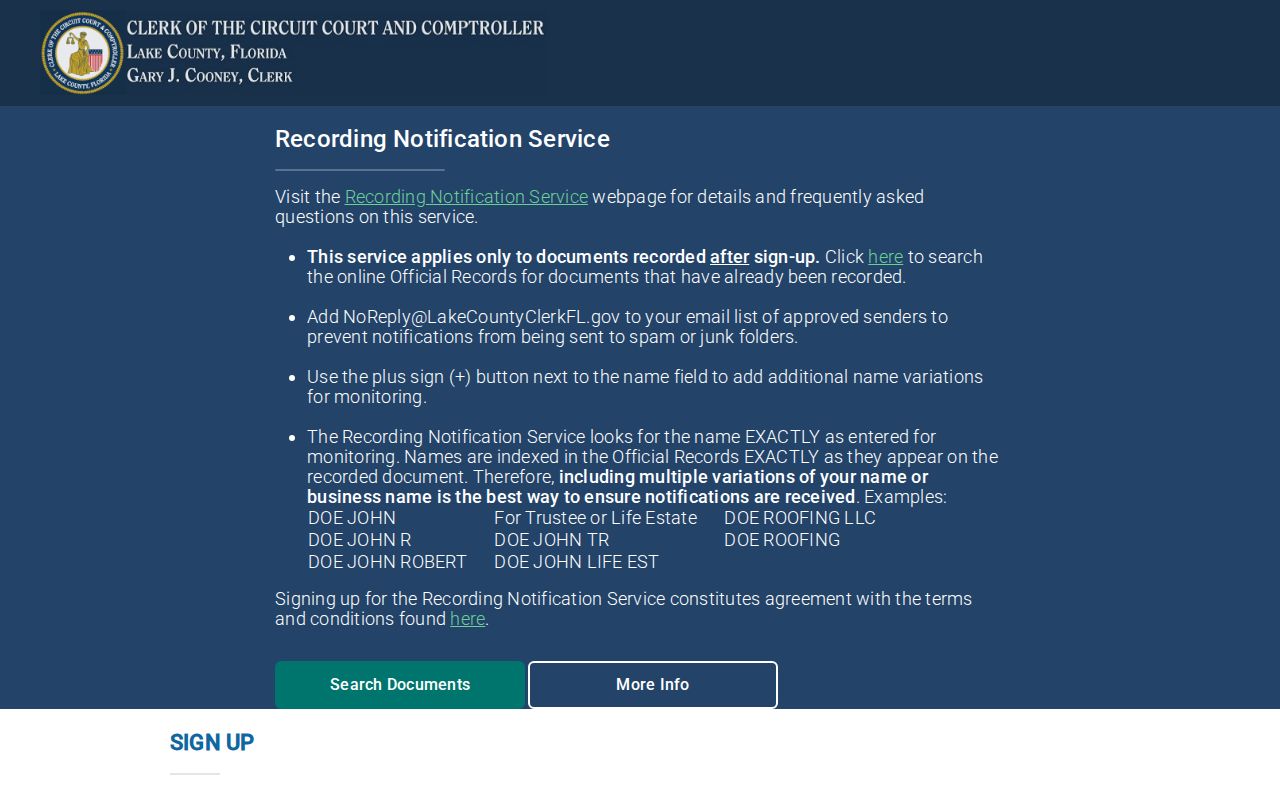
Apply the variants to deed research, but verify every candidate by parcel or legal description. An alert is prospective and is not a historical title report.
Match Clermont Households by Era
Deeds list titleholders, not all past residents. A reverse directory may name the listed adult at a street number, while an alphabetical directory can connect that person to a spouse or trade. Clermont's exact directory publishers and year runs were not verified online. Ask Cooper Memorial staff whether an edition covers Clermont, includes a reverse section, and has a title page and abbreviation key. The collections are treated in depth on the Clermont city directory page.
- Choose the latest verified directory close to the period and transcribe the entry exactly.
- Check the same address in the reverse section, then log nearby editions even when nothing changes.
- Pair the address and surnames with the nearest public federal census from 1900 through 1950.
- Use deeds for ownership and newspapers, obituaries, or probate to explain a disappearance or family transition.
A missing entry can mean an omission, move, death, boundary change, or a volume that never canvassed the postal fringe. Preserve the printed spelling and citation instead of smoothing conflicts away.
Close Clermont's Resident Trail
An obituary may link a former owner to relatives and a later community. Probate can identify heirs, representatives, and property proceedings. Death records can confirm the registered event, while marriage records may explain a surname change. Florida treats these records differently, so one access rule does not fit all.
The Florida death certificate page explains that copies without cause are broadly available, while cause information is restricted for 50 years.
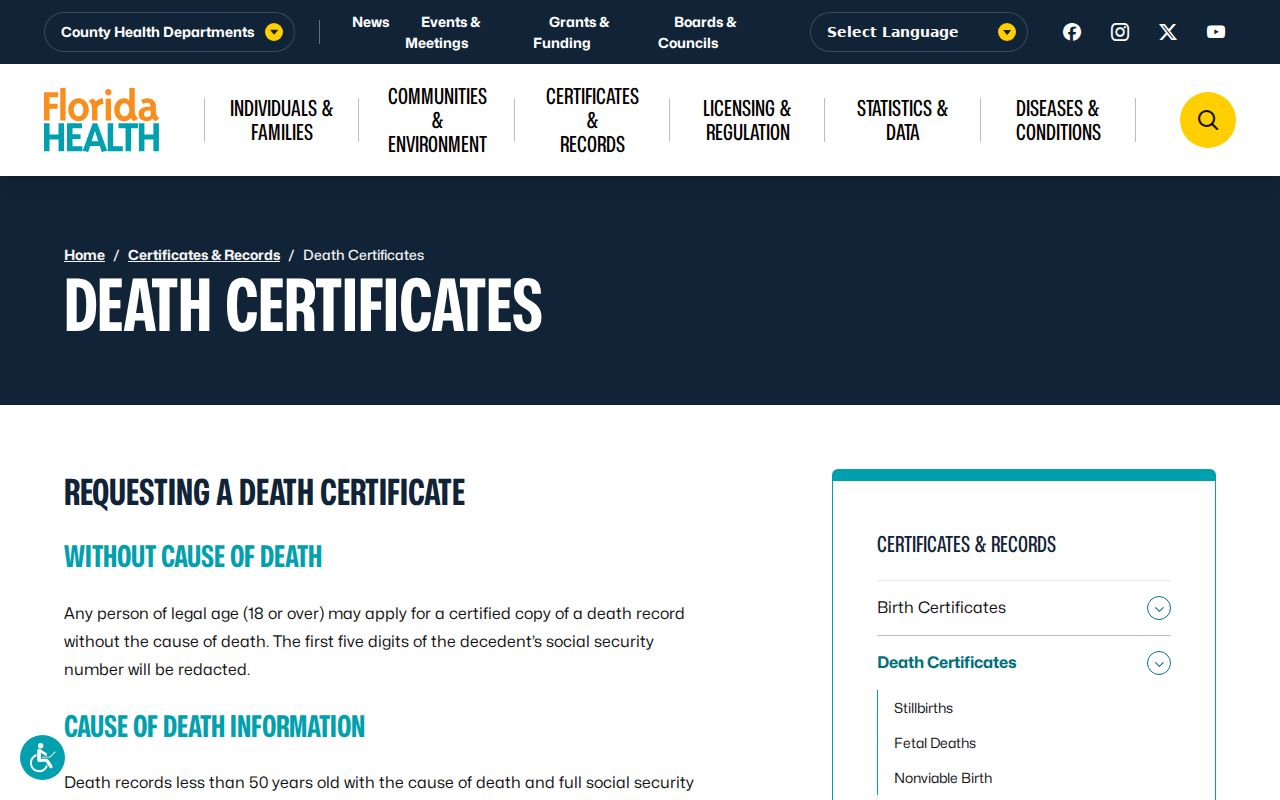
Use the certificate for the fact it records, then return to probate and local news for context.
The Florida marriage certificate route covers statewide certificates from June 6, 1927; earlier marriages remain with the issuing county clerk.
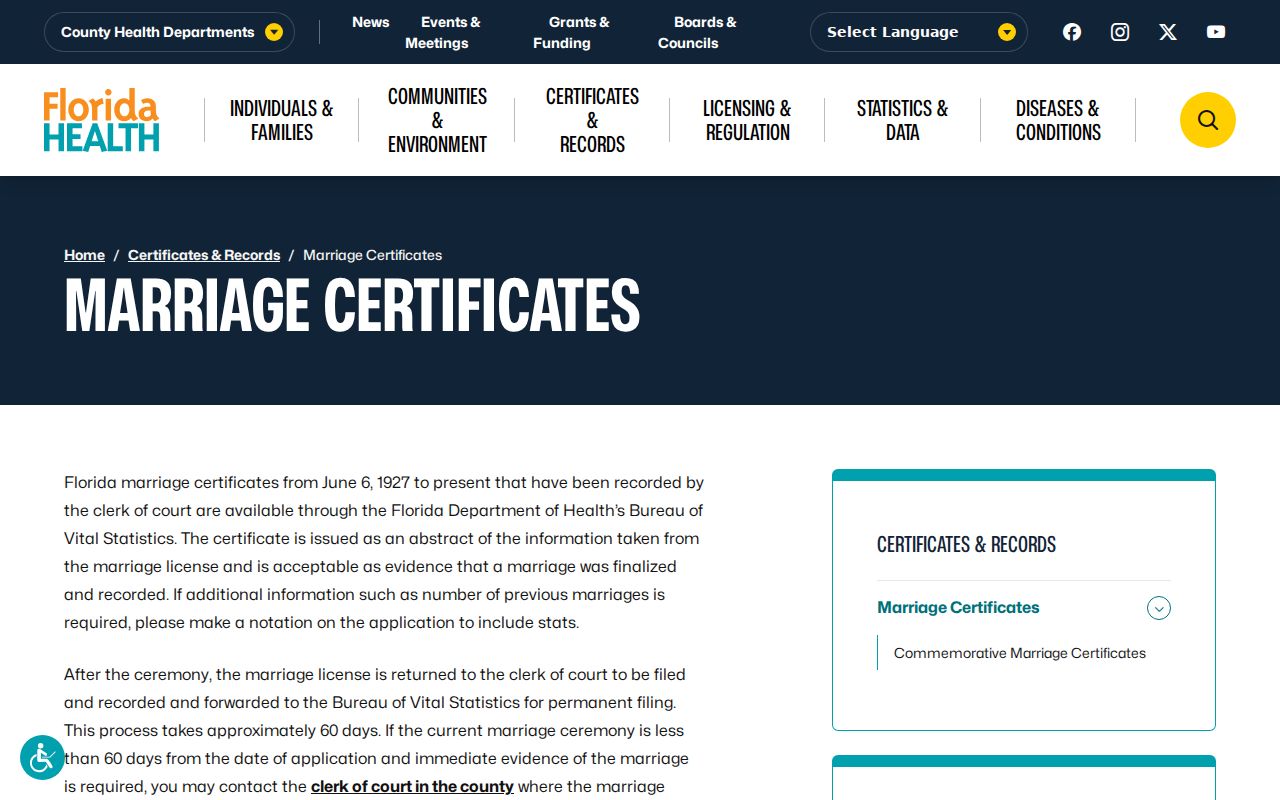
Marriage evidence can connect surnames, but it does not prove that a couple occupied the address.
Request Missing Clermont Records
If an online search fails, use the correct custodian and narrow the request. Give exact name variants, an approximate year range, the record division, and a case or instrument number when known. Ask for an existing docket, deed, permit, or roll entry, not for the office to solve the history.
The Clerk publishes an offline court-record search form for email, mail, or counter requests.
Its per-name, per-year structure rewards narrow dates. For permits, provide the situs address, parcel number, record type, and a defined period.
Use Clermont History With Care
Previous residents research supports family history, estate work, architectural history, and curiosity about a Clermont property. It cannot produce a perfect occupant list. Children, unlisted adults, short-term occupants, and people protected by law may not appear. Utility and motor-vehicle customer addresses are not substitute public directories.
Lawful use. Study a Clermont address for a legitimate personal purpose. Never use a historic or current address trail to watch, harass, intimidate, or harm anyone.
Label each address by its role: situs, owner mailing address, election residence, return address, or directory address. If two sources conflict, preserve both dates. The deed is strongest for transfer language, the assessment roll for its current owner field, and the vital certificate for its registered event.